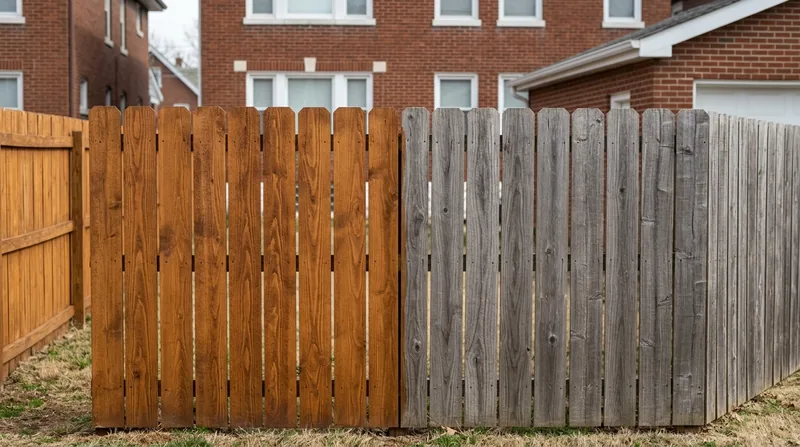




Fence staining in St. Louis is the single most cost-effective investment a homeowner can make in a wood fence. Cedar and pressure-treated pine fences that have never been sealed begin to weather and gray within months of installation. The St. Louis climate exposes unprotected wood to moisture at the ground line, UV rays from above, and seasonal temperature swings that open the grain and invite decay. Staining and sealing does not stop wood from aging, but it adds years to the fence before boards need replacement. On a fence that has never been sealed, this is the cheapest thing you can do to protect your investment and keep the fence looking new.
Why Fence Staining Matters in the Greater St. Louis Area
A new wood fence is exposed to sun, rain, and temperature changes from day one. Without a protective finish, the surface begins to oxidize and the wood loses its color and luster. Moisture penetrates the grain, especially at the base where water pools and soil contact accelerates decay. Staining and sealing act as a barrier, slowing moisture absorption and extending the life of the fence by years. The earlier you seal a fence, the longer the fence lasts and the fewer repairs you will make.
- Staining prevents moisture from penetrating the wood grain and causing rot at the base of posts and rails.
- UV-blocking stain preserves the natural color of cedar or pine and prevents the gray weathered appearance.
- A sealed fence requires less frequent cleaning and touch-ups than an unprotected fence over the same period.
- Restoring a fence that has already grayed and weathered brings back its appearance and stops further deterioration.
Homeowners in St. Louis, St. Charles, Kirkwood, and Chesterfield who stain their fences within the first year of installation add 5 to 10 years to the life of the fence.
Key info: Cedar and pressure-treated pine are the most common wood species used for fencing in the St. Louis area. Both benefit from staining, but cedar is more prone to weathering without a seal. A stain-sealed cedar fence in Ballwin or Webster Groves will hold its color and resist moisture far longer than an unsealed fence exposed to the same conditions.
For more on protecting your wood fence, see our Wood and Privacy Fence Installation page for details on fence species and construction.
How Fence Staining and Restoration Works in St. Louis
The staining and restoration process begins with a thorough cleaning to remove dirt, algae, and weathered wood fibers from the surface. Once the fence is clean and dry, we apply a stain and sealer that penetrates the wood and forms a protective barrier. The type of stain, the condition of the wood, and the size of the fence determine how long the job takes and how much it costs. We work on fences throughout St. Louis, O'Fallon, Florissant, and surrounding areas, and we handle both newly installed fences and fences that have been in place for years.
- We inspect the fence for damage, rot, or loose boards and report what we find before we begin staining.
- The fence is cleaned with a pressure washer set to a safe pressure that removes grime without damaging the wood.
- We allow the wood to dry completely before applying the first coat of stain and sealer.
- A second coat is applied to ensure full penetration and a uniform finish across all boards and rails.
- We clean up all debris and equipment when the job is complete and the stain has cured.
Most residential fence staining jobs in the St. Louis area take one to three days depending on the linear footage and the condition of the fence.
Local example: A 150-linear-foot cedar privacy fence in Chesterfield that has never been sealed typically takes two days to clean, dry, and stain. If the fence shows signs of mildew or algae growth, the cleaning step may take longer. A fence that was stained five years ago and is being refreshed takes one day because the wood is already in better condition.
Learn more about fence repair if you discover damage during the inspection.
Staining Methods and Materials
| Approach | Description | Best for |
|---|---|---|
| Transparent or Semi-Transparent Stain | Allows the natural wood grain to show through while adding color and UV protection. Penetrates the wood and does not form a surface film. | New fences and fences in good condition where the natural wood character is desired. |
| Solid or Opaque Stain | Hides the wood grain and provides uniform color coverage. Offers stronger UV protection and lasts longer than transparent stains. | Fences that have grayed or weathered, or where a consistent, painted appearance is preferred. |
| Oil-Based Stain and Sealer | Penetrates deeply and provides good water repellency. Requires longer drying time and more frequent recoating, typically every 3 to 5 years. | Premium finishes and cedar fences where depth of color and natural appearance are priorities. |
| Water-Based Stain and Sealer | Dries faster, is easier to clean up, and has lower VOC emissions. Provides solid protection and lasts 4 to 6 years before recoating is needed. | Quick turnaround projects and homeowners who prefer lower-odor, environmentally conscious products. |
The choice of stain type depends on the condition of your fence, the look you want, and how often you are willing to maintain it. We recommend the stain that best matches your fence's age, wood species, and your maintenance preference.
Fence Staining and Restoration Cost in St. Louis: What to Expect
The cost of fence staining depends on the linear footage of the fence, the condition of the wood, and the type of stain you choose. A new fence that has never been sealed costs less to stain than a fence that is heavily weathered and requires extra cleaning. Access to the fence, the presence of obstacles like shrubs or structures nearby, and whether repairs are needed also affect the final price. Most homeowners in the St. Louis area should expect to budget from $925 as a starting point for a residential fence staining project. We recommend getting two or three estimates so you understand what is included and what your fence actually needs.
- Small fences under 100 linear feet typically cost less per foot than larger projects because setup and mobilization costs are spread over fewer feet.
- Heavily weathered or grayed fences may require additional cleaning time and more aggressive surface preparation, which increases the cost.
- Solid stains that hide the wood grain and provide opaque coverage cost more than semi-transparent stains but last longer and hide imperfections.
- Repairs to rotted posts, loose boards, or damaged rails are separate from staining and should be addressed before the stain is applied.
Visit our pricing page for a detailed breakdown of costs and factors that affect your estimate.
What to Look for When Hiring a Fence Staining Service Near Me in St. Louis
Choosing the right contractor for your fence staining project is as important as the stain itself. Look for a company that has been in business for years, carries full insurance, and can provide references from recent jobs. Ask whether the contractor inspects the fence for damage before quoting the job, and confirm that the estimate includes cleaning, drying time, and two coats of stain. If your fence is in an HOA community or a historic district, verify that the contractor understands local design guidelines and will apply only approved colors and finishes. Do not assume that the cheapest estimate is the best value. A contractor who spends time preparing the surface and applying stain correctly will deliver a fence that lasts longer and looks better.
- Verify that the contractor carries full insurance and can provide a certificate of insurance upon request.
- Ask for references from at least three recent fence staining projects in St. Louis or nearby areas.
- Confirm that the estimate includes surface cleaning, drying time, materials, labor, and cleanup.
- Check whether the contractor is a member of the American Fence Association or similar professional organizations.
- Ask about the warranty on the stain and sealer, and how often the fence will need to be recoated.
St. Louis Fencing has been serving homeowners in St. Louis, Kirkwood, Ballwin, and throughout the region since 2011. We are a member of the American Fence Association, fully insured, and we stand behind every job we complete. Contact us today for a free, no-obligation estimate at (314) 668-1539.
Fence Staining & Restoration in St. Louis: Pricing Guide
| Service | Price | Details |
|---|---|---|
| Small fence staining (under 100 linear feet) | Starting at $925 | Includes cleaning, drying, two coats of semi-transparent stain, and cleanup for new or lightly weathered wood |
| Medium fence staining (100 to 250 linear feet) | Starting at $1,400 | Covers cleaning, surface prep, two coats of stain, and sealer for standard residential cedar or pressure-treated pine fences |
| Large fence restoration (over 250 linear feet) | Starting at $2,100 | Includes intensive cleaning for weathered wood, full drying, two coats of solid or semi-transparent stain, and curing time |
| Fence repairs discovered during inspection | On estimate | Rotted posts, loose boards, or damaged rails are quoted separately and should be completed before staining begins |
| Travel and mobilization | Included | No additional mileage or call-out fees for jobs in St. Louis and surrounding service areas |
| Free estimate | No charge | Response within 24 hours at (314) 668-1539. Includes on-site inspection and written quote with no obligation to book |
Indicative pricing, the exact cost depends on square footage, finish, and site access. Free personalized estimate within 24h at (314) 668-1539.


