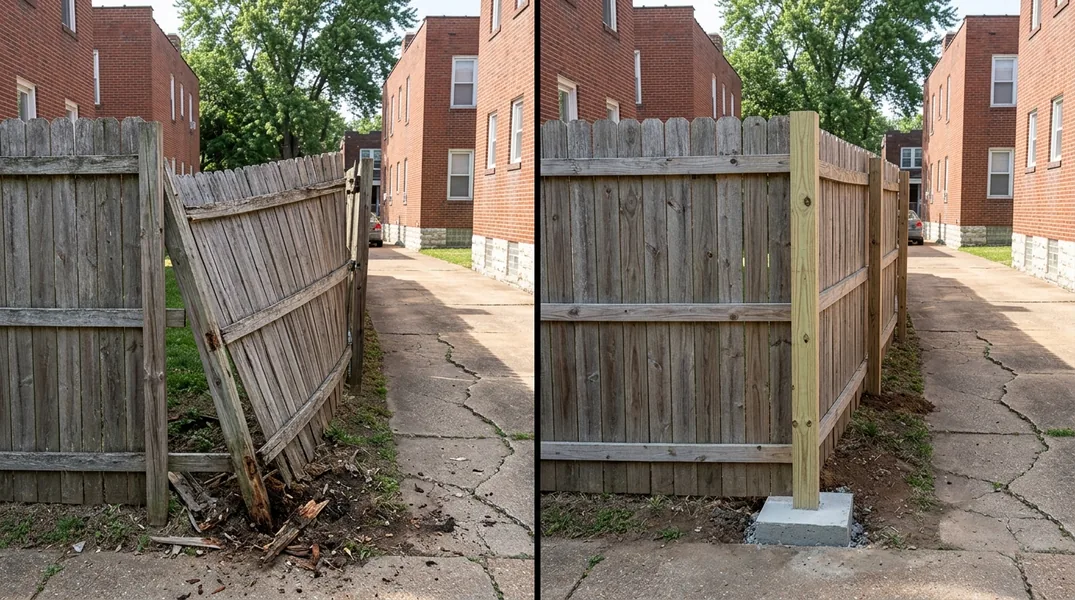
The St. Louis Fence Problem: Why Leaning Happens
If you've noticed your fence leaning to one side or visibly tilting after winter, you're not alone. Homeowners throughout St. Louis deal with this frustrating issue every year, and the causes run deeper than poor installation. The Midwest's unique climate and soil composition create the perfect storm for fence damage, causing posts to shift, settle unevenly, and eventually lean.
A leaning fence is more than just an eyesore. It signals that something is wrong with your fence's foundation, and if left unaddressed, the damage will only worsen. The good news is that understanding why your fence leans is the first step toward fixing it. Whether you're dealing with a single tilted section or a fence that's progressively gotten worse over the years, St. Louis Fencing can help you understand the root cause and recommend the right solution.
Expansive Clay: The Hidden Culprit Beneath Your Fence
Beneath the surface of many St. Louis properties lies a challenge that most homeowners never think about: expansive clay soil. This type of soil is common throughout the region and has unique properties that make it particularly hard on fence posts. When expansive clay absorbs water, it swells. When it dries out, it shrinks. This constant cycle of expansion and contraction puts enormous pressure on whatever is buried in it, including your fence posts.
The problem becomes even more pronounced during seasonal changes. Spring rains and winter snowmelt saturate the soil, causing it to expand and push against buried posts. As summer arrives and the soil dries out, it shrinks away from the posts, leaving gaps and allowing the posts to shift. Over time, this repeated movement loosens the post in its hole, and the fence begins to lean. Unlike stable clay soils in other regions, expansive clay in the Midwest creates a moving target that makes it nearly impossible for a fence post to stay perfectly plumb without proper installation techniques and materials.
Frost Heave and Winter's Impact on Fence Posts
Another major reason homeowners notice fence leaning after winter is a phenomenon called frost heave. When temperatures drop below freezing, moisture in the soil around your fence posts freezes and expands. This expansion pushes the soil upward, which in turn lifts the fence post slightly. When the ground thaws in spring, the post doesn't always settle back into its original position. Instead, it may shift laterally or remain slightly elevated, throwing off the fence's alignment.
Frost heave is particularly damaging because it's a powerful force that homeowners can't control. A post that was perfectly vertical in fall might be noticeably leaning by March. The deeper the post is buried and the more moisture present in the soil, the more dramatic the frost heave effect can be. In St. Louis, where winter temperatures fluctuate significantly and precipitation is common, frost heave is a real concern for any fence owner. This is why Wood & Privacy Fence Installation done correctly from the start, with posts set below the frost line and in properly compacted soil, can make a significant difference in long-term fence stability.
Rotted Posts: When Wood Deterioration Causes Leaning
While soil movement is a major factor in fence leaning, rotted posts are equally responsible for many alignment problems. Wood naturally absorbs moisture, and in a climate like St. Louis, where humidity and rainfall are common, fence posts are constantly exposed to conditions that promote rot. When wood begins to rot, it loses its structural integrity. A post that was once solid enough to hold a fence upright becomes soft and weak, eventually unable to support the weight of the fence boards and rails.
Rotted posts don't always fail spectacularly. Instead, they gradually weaken, causing the fence to lean slightly at first, then more noticeably over time. The rot often starts at ground level, where the post is most exposed to moisture and soil contact. By the time you notice the fence leaning, the damage may already be extensive. This is why regular inspection of your fence, especially after winter, is so important. If you spot soft spots, discoloration, or a mushy texture on any posts, you likely have rot that needs immediate attention. Fence post replacement is often the only solution, as rotted wood cannot be reliably repaired.
Leaning Fence Repair Options Near Me: When to Call a Professional
If your fence is leaning, you have several repair options depending on the severity of the problem and the underlying cause. For minor leans caused by soil settling, a professional contractor might be able to reset the post by re-digging around it, adding new concrete, and re-plumbing it. This approach works best when the post itself is still in good condition and the lean is relatively recent. However, if multiple posts are affected or if the lean is severe, a more comprehensive solution may be necessary.
For rotted or severely compromised posts, fence post replacement is the most reliable fix. This involves removing the damaged post and installing a new one, ensuring it's set at the proper depth below the frost line and in well-compacted soil. If your fence has multiple leaning sections, you might be looking at replacing several posts or even rebuilding entire sections. The good news is that modern fence materials and installation techniques are far superior to what may have been used when your fence was originally built. When you're ready to address the problem, St. Louis Fencing can provide a thorough assessment and recommend the best course of action. Call us at (314) 668-1539 or request a free estimate to get started.
Prevention and Long-Term Fence Stability in St. Louis
The best approach to avoiding a leaning fence is prevention. When installing a new fence, proper technique and material selection make all the difference. Posts should be set well below the frost line, typically at least three feet deep in the St. Louis area. The concrete used to set the posts should be high quality and properly compacted. The post itself should be pressure-treated wood or another durable material that resists rot and moisture damage.
Beyond installation, regular maintenance helps catch problems early before they become major structural issues. Inspect your fence at least twice a year, and pay special attention after winter when frost heave and settling are most likely to have occurred. Look for signs of rot, check that posts are still plumb, and address any damage promptly. If you're considering installing a new fence or replacing a damaged one, choosing the right contractor matters enormously. Wood & Privacy Fence Installation done right means understanding local soil conditions, climate challenges, and building codes. St. Louis Fencing has years of experience working with the unique conditions that St. Louis homeowners face, and we design and install fences built to last. Whether you need leaning fence repair, fence post replacement, or a completely new installation, we're here to help. Contact us at (314) 668-1539 or visit our website at https://st-louis-fencing.com to learn more about our services and pricing.
Looking for a professional tree service in St. Louis? St. Louis Fencing responds fast for all your fence needs.
Get a Free Quote